19 Jun 2026
Mapping Hybrid Itineraries: Art Festivals and Gaming Resorts Drive Cross-State Visitor Flows
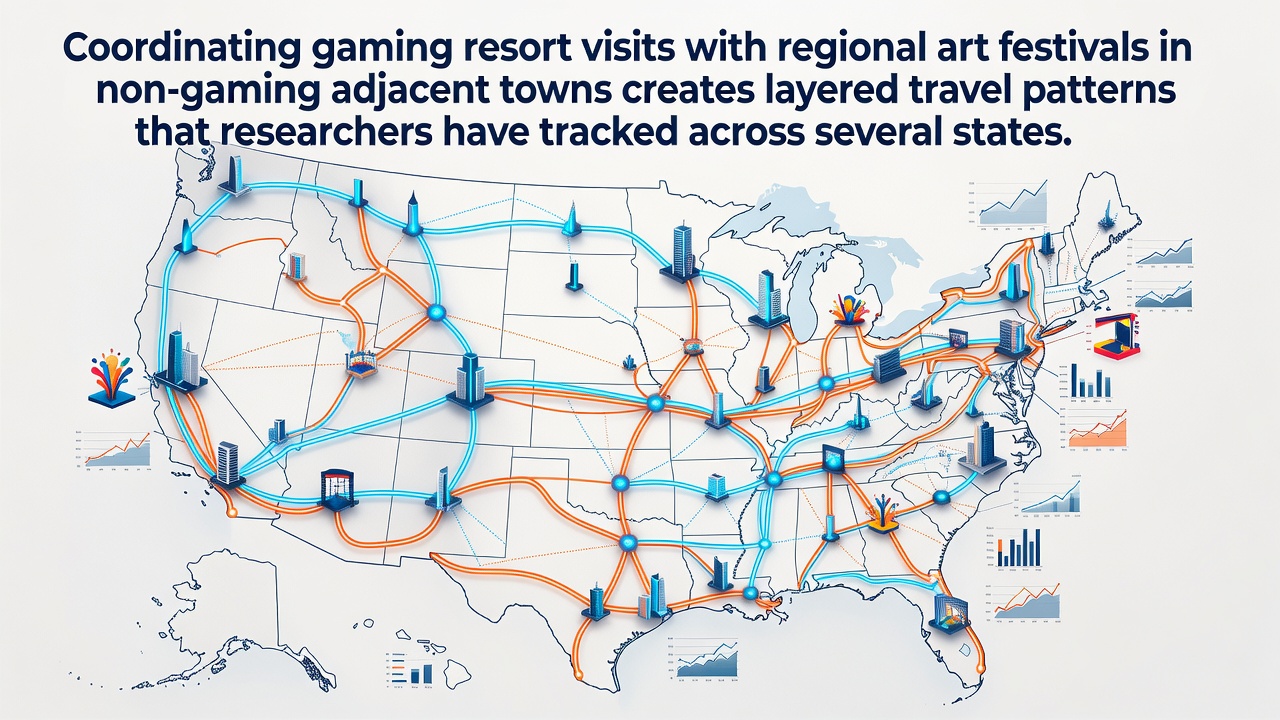
Researchers have documented how visitors combine gaming resort stays with art festivals in nearby non-gaming towns, and these combinations produce distinct multi-leg travel sequences across several states. Data from tourism tracking programs show that such pairings extend average trip lengths and spread economic activity into communities that lack gaming facilities.
Travel analysts at state tourism offices note that festival calendars often align with peak gaming seasons, and this overlap encourages participants to build itineraries that include both casino properties and cultural events. In June 2026 several Midwest and Southwest regions recorded higher volumes of overnight stays when major art festivals coincided with resort promotions.
Documented Travel Sequences
Studies conducted by university transportation research centers reveal consistent patterns where travelers arrive at a gaming resort for two or three nights, then shift to a neighboring town for festival programming before returning home. These sequences appear in records from Illinois, Colorado, and Arizona, where rail and highway connections link gaming sites with festival venues.
One analysis of credit card transaction data indicated that festival-adjacent towns experienced measurable upticks in lodging and dining revenue during the same weekends when nearby resorts hosted large gaming events. Observers attribute the growth to visitors who extend their journeys rather than making separate trips.
Regional Examples Across States
In southern Illinois, researchers tracked visitors who stayed at riverboat gaming facilities and then drove to nearby towns hosting outdoor sculpture exhibitions and music performances. Highway traffic counters and hotel occupancy figures showed coordinated spikes during the same three-day windows. Similar patterns emerged in Colorado, where resort properties near mountain passes connect with valley communities that stage annual visual arts gatherings each summer.
Arizona tourism reports describe parallel movements around desert gaming locations and adjacent towns that organize gallery walks and street festivals. Data collected through mobile location services confirmed that many device IDs moved between resort zip codes and festival zip codes within single trips during June 2026.

Transit and Planning Factors
Transportation departments in multiple states report that coordinated schedules encourage use of regional rail lines and shuttle services between gaming corridors and festival towns. When event organizers publish joint calendars, travelers book multi-stop packages more frequently, according to booking platform aggregates. This integration reduces single-destination trips and increases the number of nights spent across two or more communities.
Local chambers of commerce in non-gaming towns have begun sharing festival dates with resort marketing teams, and joint promotional materials now appear on several property websites. These efforts correlate with higher cross-visitation rates documented in visitor surveys conducted by state economic development agencies.
Economic Distribution Effects
Economic impact assessments prepared by state universities show that layered itineraries distribute spending more evenly than single-site visits. Gaming resorts capture lodging and entertainment revenue, while festival towns receive income from admissions, artisan sales, and additional overnight accommodations. Figures compiled for the 2025-2026 festival season indicate measurable gains in sales tax collections in both types of locations.
Researchers continue to monitor these flows through anonymized cell phone data and lodging statistics. Their ongoing work examines how weather patterns, fuel prices, and festival programming changes influence the frequency of combined trips across state lines.
Conclusion
Travel pattern research demonstrates that pairing gaming resort visits with art festivals in adjacent non-gaming towns generates extended, multi-location journeys tracked consistently across several states. June 2026 data reinforced earlier observations that coordinated calendars increase overnight stays and spread economic activity. State agencies and academic teams maintain records that quantify these movements through transaction logs, traffic counts, and location services, providing a factual basis for understanding current visitor behavior.